Chasing Light Through Leaves: Why Gen Z Is Trading the Scroll for Shinrin-Yoku

Photo by Photo by Niklas Hamann on Unsplash on Unsplash
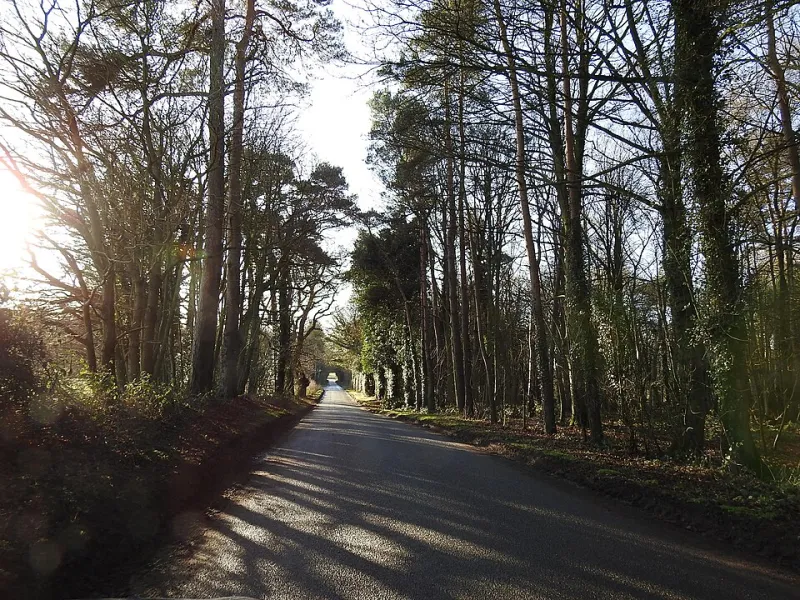
There's a word in Japanese that has no real English equivalent, and right now it's living rent-free in the heads of a generation that grew up glued to screens. Komorebi — the interplay of sunlight filtering through tree leaves, that dappled, flickering glow you catch on a forest floor or through a canopy on a lazy afternoon walk. It sounds almost too poetic to be practical. But for a lot of Gen Z, it's becoming something closer to a lifeline.
We're deep in what researchers are calling a "digital exhaustion era." Infinite scroll was supposed to be entertaining. Instead, it turned into a second job nobody applied for. And while the wellness industry has spent the last few years throwing increasingly extreme solutions at the problem — ice baths, dopamine detoxes, $400 weighted blankets — a quieter, older answer has been sitting in the Japanese countryside for decades.
Enter shinrin-yoku. Literally translated as "forest bathing," it's a practice the Japanese government formally introduced in the 1980s as part of a national public health initiative. The concept is disarmingly simple: go into nature, slow down, and absorb it through all your senses. No fitness goals. No meditation app. No content to consume. Just you, the trees, and whatever your nervous system has been trying to tell you between notifications.
It's Not a Hike. It's Not Meditation. It's Something Else.
Here's where a lot of Americans get tripped up: shinrin-yoku isn't really about exercise, and it's not quite the same as mindfulness practice either. It's closer to what you might call intentional presence — the act of moving slowly through a natural environment with the specific goal of letting it wash over you. Certified shinrin-yoku guides (yes, that's a real credential, and yes, there are now hundreds of them operating across the US) will tell you the whole point is to stop trying to do something and just be somewhere.
Research backs this up harder than you'd expect. Studies out of Japan and South Korea have consistently shown that time spent in forested environments lowers cortisol levels, reduces blood pressure, and boosts immune function. A 2019 study published in Frontiers in Psychology found that even 20 minutes in a natural setting significantly reduced stress hormone levels in urban dwellers. Scientists point to phytoncides — antimicrobial compounds released by trees — as part of the biological mechanism. Basically, forests are literally medicating you, and you don't even have to do anything.
For Gen Z, a generation that has been told to optimize everything and has the burnout rates to show for it, the idea that doing less is the actual move hits different.
Komorebi as Aesthetic, Komorebi as Philosophy
Scroll through TikTok or Instagram right now and you'll notice something. A particular visual language has been taking over — soft light through branches, slow walks on leaf-covered paths, golden hour filtering through a city park. The hashtag #komorebi has racked up millions of views across platforms, and it's not just nature photographers posting. It's regular people documenting ordinary moments: a patch of light on a bedroom floor, sunlight breaking through a subway grate, shadows moving across a lunch table outside.
What's happening here isn't just an aesthetic trend. It's a philosophical shift. Komorebi, as a concept, is fundamentally about finding beauty in transience — in the unrepeatable, un-capturable quality of a single moment of natural light. That's almost the exact opposite of what social media was built to do. And yet Gen Z is using social media to celebrate it, which is either deeply ironic or kind of brilliant depending on how you look at it.
The komorebi moment has become a kind of shorthand for the thing people are actually chasing when they talk about digital detox. Not total abstinence from screens — that's not realistic and everyone knows it — but the ability to notice something beautiful without immediately reaching for your phone. To let a moment exist without documenting it. To be the only audience for your own experience.
From Wellness Trend to Real Estate Signal
Here's where it gets really interesting. Shinrin-yoku's influence isn't staying in the wellness lane. It's starting to show up in how young Americans are making much bigger decisions.
Real estate agents in cities like Portland, Asheville, Denver, and the Hudson Valley are reporting that proximity to green space has become a non-negotiable for a growing number of millennial and Gen Z buyers and renters — not just as a nice-to-have, but as a genuine mental health consideration. The language people are using has shifted too. It's less "I want a yard" and more "I need to be able to walk somewhere that feels like this."
Urban planners are paying attention. Cities like San Francisco and Minneapolis have been quietly expanding their urban forest programs, and some landscape architects are explicitly citing Japanese forest therapy research in their proposals for park redesigns. The idea that green canopy isn't just decorative but functionally therapeutic is gaining serious traction in policy circles.
Even interior design is catching the komorebi wave. The concept of biophilic design — incorporating natural light, living plants, and organic textures into built spaces — has exploded in popularity, and designers will tell you that the specific quality of light filtering through greenery is something clients are now actively requesting. People are literally trying to bring komorebi indoors.
How to Actually Do This (Without Making It a Whole Thing)
The best part about shinrin-yoku is that the barrier to entry is almost insultingly low. You don't need gear. You don't need a forest preserve membership. You don't need to drive two hours to a national park, though that's obviously great if you can.
The practice can start as small as sitting under a tree in your city's nearest park for 15 minutes without looking at your phone. Or taking a slightly longer route home that goes through a green space instead of along a main road. Or just standing outside your apartment building in the morning and looking up at whatever sky and whatever leaves are available to you.
The shinrin-yoku framework asks you to engage all five senses deliberately: What do you smell? What sounds are layered underneath the traffic noise? What does the air feel like on your skin? What do the shadows look like when the wind moves through the branches above you?
That last one — that's your komorebi moment. And once you start noticing it, it's genuinely hard to stop.
In a cultural moment defined by overstimulation, the Japanese figured out something that feels almost radical: the cure for too much input might just be the oldest, quietest, most freely available input there is. Sunlight. Leaves. The space between them.
Log off. Look up.