Boring Is the New Viral: How Japanese Design Is Making Us Finally Put Down Our Phones
Somewhere between your fourteenth TikTok in a row and the moment you realize you've been staring at your phone for two hours without retaining a single thing, a quiet revolution has been brewing. It doesn't involve a new app, a trending sound, or a celebrity beef. It involves a cracked ceramic tea bowl, a lot of negative space, and a centuries-old Japanese philosophy that Silicon Valley absolutely did not see coming.
Welcome to the slow scroll era — and Japan has been the architect this whole time.
Your Brain Is Tired and It Knows It
Let's be honest: the current content landscape is basically a strobe light for your nervous system. Platforms are algorithmically engineered to reward speed, shock, and novelty. The faster a creator can hook you, the more the algorithm pushes them. The result? An entire generation of content consumers who are simultaneously overstimulated and deeply, profoundly bored.
A 2023 survey by the American Psychological Association found that nearly 43% of Gen Z adults identified social media as a significant source of stress — not because they hate it, but because they can't stop, and stopping feels like falling behind. The content is everywhere and it means nothing, and somehow that's worse.
So what's the antidote? Turns out, Japan figured it out centuries ago.
Wabi-Sabi Walks Into Your Feed
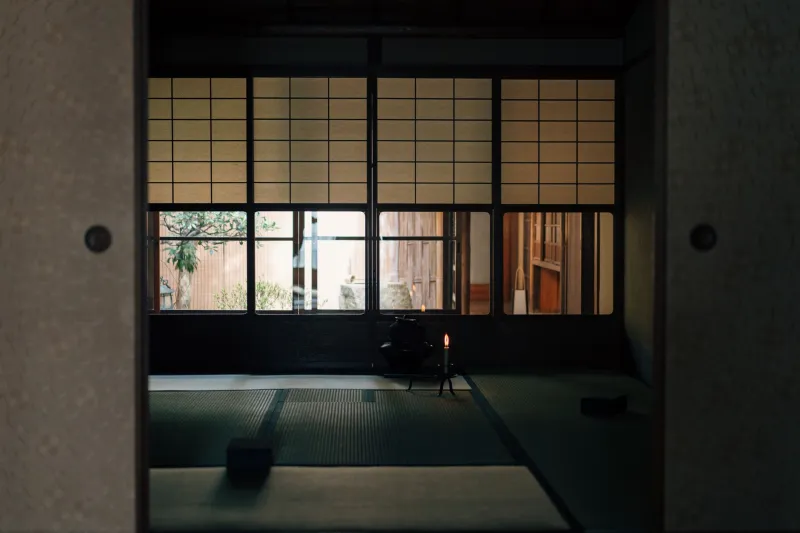
Wabi-sabi is one of those Japanese concepts that sounds simple until you sit with it. Roughly translated, it's the beauty found in imperfection, impermanence, and incompleteness. A handmade bowl with an uneven glaze. A garden path where the moss has grown unevenly between stones. The way afternoon light hits a worn wooden floor.
It is, in almost every way, the philosophical opposite of the hyper-polished, filter-heavy, ring-light aesthetic that dominated social media for the better part of a decade.
And Gen Z? They're absolutely eating it up.
Creators across YouTube, Instagram, and even TikTok are leaning hard into wabi-sabi-influenced aesthetics — grainy film photography, unedited pauses in conversation, videos that linger on mundane details like rain hitting a window or tea being poured in real time. The comments on these posts are telling: "Why does this feel like a hug?" "I watched this three times and I don't know why." "This is the first video that didn't make me anxious in months."
This isn't accidental. It's a direct response to burnout culture, and Japanese visual philosophy handed creators the vocabulary to name what audiences were craving.
The 'Ma' Moment in Content Creation
If wabi-sabi is about embracing imperfection, ma — the Japanese concept of meaningful negative space — is about what you don't fill in. In architecture and design, ma refers to the intentional pause, the gap, the breathing room between elements. It's the silence between notes that makes music feel like music instead of noise.
In content terms, ma is the creator who lets a shot hold for five seconds longer than the algorithm recommends. It's the newsletter writer who sends one carefully considered piece a month instead of daily blasts. It's the YouTube essayist who opens a 20-minute video with two full minutes of ambient sound before saying a single word.
Channels like Abroad in Japan, which blend long-form storytelling with quiet, considered visual pacing, have amassed millions of subscribers doing exactly this. Aesthetic channels built around Japanese minimalism — think slow morning routines, studio apartment tours, and iyashikei (healing) content — are consistently outperforming trend-chasing competitors in watch time and subscriber loyalty.
The data is catching up to what viewers already feel: slower content keeps people. The algorithm optimizes for clicks; ma optimizes for trust.
The Curated Feed as a Form of Resistance
On Instagram, a growing community of creators — many of them directly influenced by Japanese visual culture — is treating their feeds less like a content pipeline and more like an exhibition space. Each post is considered in relation to the ones around it. Color palettes are cohesive. Captions are sparse but intentional. Posting frequency drops dramatically.
This runs completely counter to every growth hack you've ever read in a social media marketing thread. Post every day. Use trending audio. Jump on every format. These creators are doing the opposite, and their engagement rates are quietly humiliating people who follow the playbook.
It mirrors the Japanese concept of kodawari — an obsessive, almost spiritual dedication to craft and detail that prioritizes quality over quantity in a way Western hustle culture structurally discourages. A sushi chef who spends a decade mastering rice before he's allowed to touch fish. A ceramicist who throws the same shape five hundred times before calling it finished. Apply that energy to a content strategy and what you get is something that feels genuinely rare: a feed that respects your attention.
'Boring Content' Is Having Its Main Character Moment
Here's the part that would have gotten you laughed out of a 2019 brand strategy meeting: the content that's resonating most deeply with overstimulated Gen Z audiences is, by conventional metrics, incredibly boring.
Quiet cooking videos with no music and no voiceover. Time-lapses of plants growing. Someone arranging objects on a desk for thirty minutes. Japanese YouTube has an entire genre called BGM content — background music videos featuring simple, repetitive imagery designed to accompany studying or working — and American creators have been liberally borrowing from it for years now, often without realizing that's exactly what they're doing.
Lofi hip hop. Study with me videos. Aesthetic "day in my life" vlogs shot on film cameras with no jump cuts. This is wabi-sabi and ma in content form, and it's building some of the most loyal, emotionally connected audiences on the internet right now.
What This Means for the Future of the Feed
The platforms are paying attention, even if they're slow to adapt. YouTube's continued investment in long-form content and its push for "quiet" ambient channels on YouTube TV signals an awareness that not every viewer wants to be jolted awake every eight seconds. Pinterest has leaned aggressively into its identity as a low-anxiety visual space. Even TikTok, the king of the dopamine hit, has seen creators build massive followings with content that is deliberately, defiantly slow.
Japanese aesthetics didn't invent the desire for intentionality — but they gave it a framework, a vocabulary, and a visual language that resonates across cultures. Wabi-sabi tells you it's okay if it's not perfect. Ma tells you the pause is part of the point. Kodawari tells you that caring deeply about something, even when no one is watching, is its own reward.
In a media landscape built to make you feel like you're always behind, always missing something, always one scroll away from the content that will finally satisfy you — that philosophy isn't just refreshing.
It might be the most radical thing on the internet right now.