Strip It All Down: How Japan's Onsen Ritual Is Giving Gen Z the Apology Playbook They Never Had
Let's be honest: most of us are terrible at apologizing. We send a half-hearted "my bad" text, maybe drop a "I'm sorry you felt that way" if we're feeling particularly cowardly, and then expect everything to just... reset. Gen Z gets clowned on for this constantly, but the truth is it's not a generational failure — it's a cultural one. Americans, broadly, have never really been taught how to make peace. We're taught to win arguments, not end them.
Japan, on the other hand, has been quietly engineering the perfect conditions for genuine reconciliation for hundreds of years. And the setting? A steaming communal bath in the middle of a mountainside. Welcome to onsen culture — and yes, it has a lot to teach us.
What Even Is an Onsen?
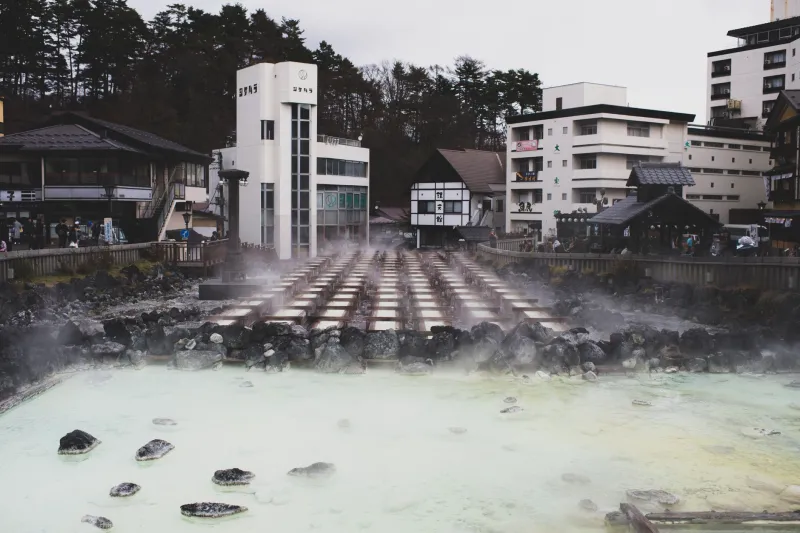
For the uninitiated: onsen are Japan's geothermally heated natural hot spring baths, scattered across the country in everything from luxury ryokan (traditional inns) to humble roadside stops. They're a fixture of Japanese life — people visit them solo, with family, with coworkers, with strangers. You strip down completely, rinse off, and then ease into water that's been bubbling up from the earth for millennia. No phones. No clothes. No status markers. Just bodies in hot water.
There's a strict ritual to it. You clean yourself thoroughly before entering the communal bath. You move quietly. You don't splash. You don't stare. The whole experience is built around a kind of radical mutual respect — an unspoken agreement that everyone in this water deserves dignity, regardless of what they look like or who they are outside those walls.
And here's the thing: that environment? It turns out to be almost chemically perfect for the kind of honest, ego-free conversation that real apologies require.
Why the Setting Actually Matters
We talk a lot about vulnerability in therapy-speak, but we rarely talk about the conditions that make vulnerability possible. Gen Z knows better than any previous generation that context shapes communication — that a DM hits differently than a voice note, that a conversation over dinner lands differently than one over text. So why haven't we applied that same logic to the places where we try to repair relationships?
Onsen culture essentially solves this problem by design. When you're sitting in a shared bath with no clothes, no accessories, no curated aesthetic — you're already vulnerable. The hierarchy flattens. The performative armor comes off. It becomes significantly harder to deliver a corporate non-apology when you're literally stripped of every social prop you normally hide behind.
Research in environmental psychology backs this up. Warm water reduces cortisol levels and lowers the body's threat response. Physical warmth has been repeatedly linked to increased feelings of social trust and interpersonal openness. In other words, the onsen isn't just a vibe — it's a biochemically optimized conflict resolution chamber.
The Japanese Framework for Accountability
But the physical environment is only half the story. What makes onsen-adjacent apology culture so powerful is that it sits within a broader Japanese framework of accountability that goes way deeper than saying sorry.
In Japan, apology isn't a transaction — it's a process. The concept of hansei (self-reflection) means you're expected to genuinely examine your own role in a conflict before you open your mouth. You're not just apologizing for the outcome; you're acknowledging the internal failure that led to it. Meanwhile, omoiyari — roughly translated as empathetic consideration — means you're expected to actively imagine the impact of your actions on the other person before, during, and after an apology.
Combine that cultural scaffolding with the ego-softening environment of an onsen, and you get something Americans rarely experience: an apology that actually lands. One that doesn't feel like a PR statement. One that rebuilds rather than just patches.
What This Looks Like IRL for Gen Z
Okay, so most of us aren't flying to Hakone to apologize to our situationship or patch things up with a work frenemy. But the principles translate.
A growing number of wellness spas across the US — particularly in cities like Los Angeles, New York, and Portland — are introducing communal soaking experiences directly inspired by Japanese bathhouse culture. Spots like Onsen Hotel & Spa in British Columbia (a quick trip from Seattle) or the East Wind Lake Village in Missouri are drawing Gen Z crowds specifically because they offer something rare: a phone-free, judgment-free space where walls come down.
Some therapists are even starting to recommend what they're calling "parallel activity" conversations — difficult talks held while doing something physical and sensory together, like soaking, hiking, or cooking — because the shared experience reduces the adversarial face-to-face dynamic that makes hard conversations feel like debates.
TikTok's mental health corner has been buzzing with variations of this idea. Creators are talking about "apology dates" — intentional, environment-first approaches to reconciliation that ditch the couch confrontation in favor of shared experiences. A bath. A walk. A meal made together. The setting does some of the emotional heavy lifting before a single word is spoken.
The Radical Act of Showing Up Without Armor
Here's the deeper cultural shift that onsen thinking is nudging us toward: the idea that genuine repair requires genuine exposure. Not oversharing. Not trauma-dumping. But actual presence — the willingness to show up without your defenses fully activated.
Gen Z has grown up in a culture of relentless self-curation. Every apology, every vulnerable moment, every conflict resolution attempt happens through a screen that can be cropped, filtered, and deleted. Onsen culture is the philosophical opposite of that. It says: be here, be real, be seen. The water doesn't care about your follower count.
And maybe that's exactly the energy 2025 needs. Not longer apology paragraphs. Not more elaborate accountability posts. Just the willingness to get in the water, let the heat do its thing, and actually mean what you say.
Japan figured this out centuries ago. The rest of us are just catching up.