Eating for an Audience: How Japanese ASMR Food Videos Became America's Favorite Guilty Pleasure
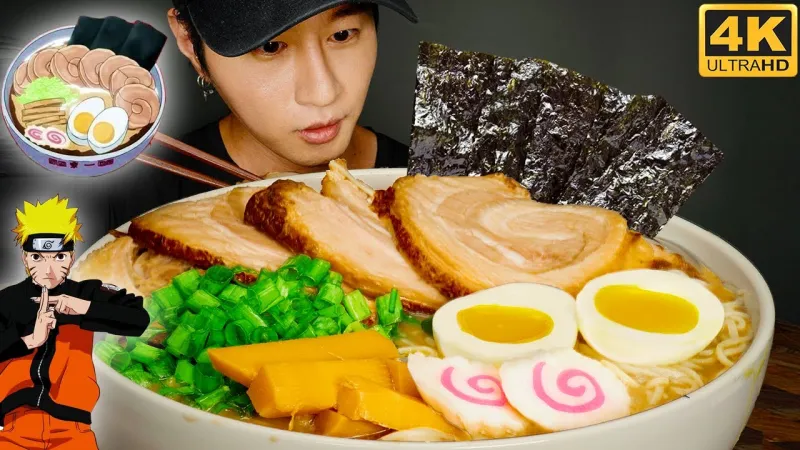
Photo: Japanese ramen ASMR eating close up food video content creator, via i.ytimg.com
Picture this: it's 11 p.m., you're lying in bed, and somehow you've spent the last forty-five minutes watching a soft-spoken Japanese woman methodically work her way through a tower of wagyu beef and noodle soup. You're not even hungry. You're just... completely unable to stop watching.
If that sounds familiar, congratulations — you've officially been absorbed into one of the internet's most quietly dominant content genres. Japanese ASMR eating videos and mukbang culture have exploded across TikTok and YouTube, racking up billions of views from American audiences who can't quite explain why they keep coming back. But the obsession makes a lot more sense once you start pulling back the layers.
Wait, Isn't Mukbang a Korean Thing?
Technically, yes. The format originated in South Korea around 2010, where streamers would eat enormous quantities of food live on camera while chatting with viewers — the word itself is a mashup of the Korean words for "eating" and "broadcast." But Japan took the concept and did what Japan tends to do: refined it, aestheticized it, and made it deeply, almost medically satisfying to watch.
Where Korean mukbang often leans into volume and spectacle — think overflowing plates and theatrical reactions — Japanese eating content tends to favor precision and atmosphere. The lighting is softer. The sounds are more deliberate. The food itself is treated almost like a subject in a nature documentary. There's reverence baked into the presentation that feels distinctly Japanese, and American audiences are eating it up (pun absolutely intended).
The ASMR Connection Nobody's Talking About Enough
Here's where it gets genuinely interesting from a psychology standpoint. ASMR — that tingly, deeply relaxing response triggered by certain sounds — has been a massive wellness trend in the US for years. What Japanese food content creators figured out, seemingly by cultural instinct rather than algorithmic strategy, is that eating sounds are among the most universally triggering ASMR stimuli out there.
The crackle of a perfectly fried katsu cutlet. The wet snap of biting into a fresh mochi. The long, unapologetic slurp of soba noodles (which, by the way, is considered polite in Japan — a cultural detail that fascinates American viewers endlessly). These sounds aren't incidental to the content; they're the whole point.
Dr. Craig Richard, a researcher who has studied ASMR extensively, has described the phenomenon as activating the same neural pathways associated with trust, comfort, and safety. In a media landscape that's increasingly loud, chaotic, and anxiety-inducing, watching someone quietly and joyfully eat beautiful food is basically a digital security blanket. Japanese creators have been offering exactly that for years — they just didn't know half their audience would eventually be in Ohio.
The Creators You Need to Know Right Now
A few names have broken through from niche YouTube corners into genuine mainstream American recognition, and they're worth knowing.
Kinoshita Yuka is probably the closest thing Japanese mukbang has to a crossover superstar in the US. Known for her ability to consume genuinely staggering amounts of food while maintaining an almost serene demeanor, her videos blend the spectacle of traditional mukbang with a warmth and approachability that American audiences find irresistible. Her comment sections are flooded with Americans asking where they can find the food she's eating — which is basically free tourism advertising for Japan.
Then there's the quieter, more ASMR-forward end of the spectrum, represented by creators like Morisaki Aden, whose no-talking, close-mic eating videos feel almost meditative. No narrative, no performance — just extraordinarily well-filmed food and the sounds it makes. This style has found a particularly devoted following among American viewers who use the videos specifically for sleep or anxiety relief.
YouTube's algorithm has been a massive accelerant here. Once you watch one Japanese food video, the recommendation engine essentially locks you into a warm, crunchy, slurpy pipeline that's very difficult to escape.
Why Japan's Food Culture Translates So Well
There's something worth examining about why Japanese food content specifically resonates with American viewers in a way that, say, randomly filmed American eating content often doesn't.
Japanese food culture carries an inherent visual and cultural cachet in the US. Sushi, ramen, and wagyu have all achieved something approaching aspirational status in American dining culture over the past decade. Watching someone eat these foods on screen activates a kind of vicarious experience that's aspirational as much as it is sensory. You're not just watching someone eat — you're watching someone navigate a food culture that feels both deeply foreign and increasingly familiar.
There's also the "omotenashi" factor — the Japanese concept of wholehearted hospitality — that seems to bleed into how Japanese creators approach their food content. The care taken in presentation, the respect shown toward the food itself, communicates something that transcends language barriers. American viewers pick up on that energy even without understanding a single word being spoken.
TikTok Turned It Into a Full-On Movement
If YouTube gave Japanese eating content a home, TikTok gave it a megaphone. The platform's short-form format is almost tailor-made for food ASMR clips — a fifteen-second snippet of someone biting into a perfectly seared piece of A5 wagyu can rack up millions of views before the algorithm has even had breakfast.
US-based creators have started explicitly incorporating Japanese food aesthetics and ASMR techniques into their own content, which has created a fascinating feedback loop. American mukbangers are studying Japanese presentation styles. Japanese creators are learning from American creators' storytelling approaches. The genre is genuinely evolving in real time, and the cross-cultural pollination is producing some of the most interesting food content on the internet.
Food brands and Japanese tourism boards have taken notice too. You'll increasingly spot subtle product placements for Japanese snack brands and restaurant chains in these videos, targeting an American audience that's already primed to be interested.
So What Does It All Mean?
At its core, the American obsession with Japanese ASMR eating content is a story about comfort, curiosity, and the universal language of really good food. In a media environment that often feels like it's actively trying to stress you out, there's something genuinely radical about content whose entire purpose is to make you feel calm and satisfied.
Japanese creators didn't set out to capture American audiences. They were just doing what they do — approaching something everyday with extraordinary care and attention. The fact that millions of Americans have found their way to these videos and keep returning says as much about what we're hungry for culturally as it does about the food itself.
Now if you'll excuse us, we just found a two-hour video of someone eating conveyor belt sushi in Osaka, and we have absolutely no intention of stopping it.