Swipe Right on Japan: How Anime Filters and Kawaii Culture Are Completely Rewriting the Rules of Online Dating
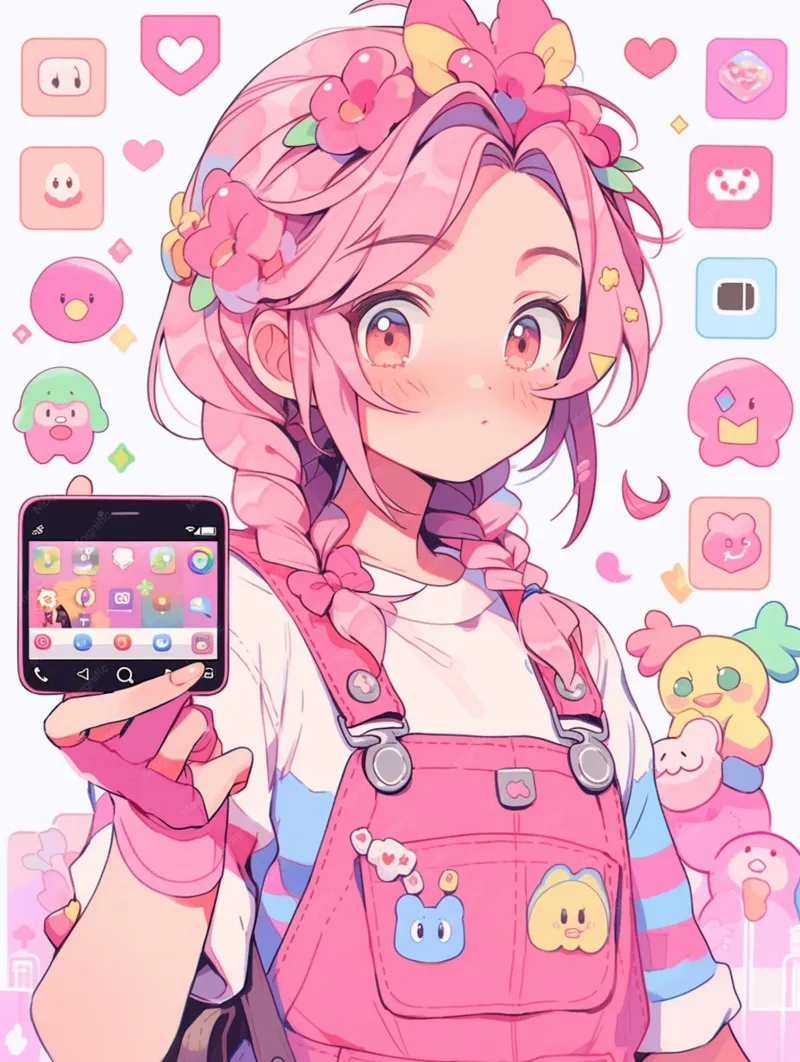
Photo: anime aesthetic dating app phone screen kawaii filter young woman, via img.freepik.com
Somewhere between a Hinge profile photo and a Snapchat filter lies a very specific kind of digital romance fantasy — one with big eyes, soft lighting, and just a hint of cherry blossom. If you've been on any major dating platform in the last year or so, you've probably noticed it. The aesthetic has shifted. Profiles feel more stylized. The vibe is more animated, in every sense of the word.
Japanese aesthetics have fully infiltrated the American dating app ecosystem, and it's weirder, more interesting, and more culturally loaded than it might look at first swipe.
The App That Started a Conversation
Let's start with the extreme end of the spectrum, because it's impossible to talk about this trend without acknowledging the AI companion apps that have exploded in popularity over the last couple of years. Apps like Replika and the more Japan-inflected Gatebox and AI Girlfriend platforms are selling users a fantasy that's unmistakably shaped by anime tropes: a devoted, emotionally attuned digital partner with a kawaii design sensibility and the conversational warmth of a shojo manga protagonist.
Gatebox, for context, is a literal holographic companion device that originated in Japan and became a global conversation piece when its promotional videos went viral. The device projects an animated character — typically a big-eyed, cheerful young woman — into your home. She greets you when you wake up. She texts you during the day. She tells you she missed you. It sounds like science fiction. It sold out repeatedly.
In the US, the AI companion space has grown massively, with Replika reporting millions of active users at its peak, many of whom describe their AI partners in deeply romantic terms. The visual language these apps use — soft color palettes, large expressive eyes, gentle character design — is borrowed almost wholesale from Japanese animation. That's not an accident.
Mainstream Platforms Are Catching On
You don't have to download a niche AI app to see Japan's fingerprints on modern dating culture, though. The influence has crept into the mainstream in subtler — and arguably more fascinating — ways.
Snap and TikTok's anime-style face filters have become some of the most-used tools on both platforms, and plenty of people are using them in their dating profile photos. Trend analysts at dating app Hinge noted a significant uptick in users incorporating stylized, filter-heavy photos in 2023 and 2024, with anime-adjacent aesthetics ranking among the most popular visual styles. On Tinder, the proliferation of AI-enhanced photos — many of which default toward larger eyes, smoother skin, and softer features that echo anime character design — has become a whole conversation about authenticity and attraction.
Meanwhile, a new category of dating apps is borrowing structural inspiration from Japanese dating show formats. Shows like Terrace House — the Netflix-distributed Japanese reality series that became a genuine American cult phenomenon — introduced US audiences to a slower, more emotionally deliberate style of romantic storytelling. No dramatic eliminations, no manufactured drama, just people living together and maybe, gradually, falling for each other. Several US-based app developers have cited Terrace House's format as an influence on features designed to encourage slower, more intentional matching.
What Trend Forecasters Are Actually Saying
We talked to a few people who spend their professional lives watching culture move in real time, and the consensus is nuanced.
"What's happening isn't really about Japan specifically," says one digital culture analyst who works with several major tech companies. "It's about a broader exhaustion with hyper-realistic, high-pressure dating culture. Anime aesthetics offer an escape into something softer and more emotionally legible. The emotions are bigger, the intentions are clearer, the world is more beautiful. People are hungry for that."
Another forecaster, who focuses specifically on Gen Z consumer behavior, frames it differently: "For a generation that grew up watching anime and playing JRPGs, the visual language isn't exotic — it's nostalgic. Using an anime filter on your dating profile isn't necessarily about performing Japaneseness. It's about reaching for a set of associations that feel safe and emotionally warm."
That distinction matters. Because while the aesthetics are Japanese in origin, the way they're being used in American dating culture is its own thing entirely — a remix rather than a reproduction.
The Romanticization Question Nobody Wants to Answer
Here's where things get complicated, and honestly, it's worth sitting with the discomfort for a second.
The Western fascination with Japanese dating culture has a long and not-always-flattering history. From the fetishization that's plagued Asian women in American pop culture for decades to the more recent "waifu" phenomenon that flattens complex cultural products into consumable fantasies, there's a real risk that the current wave of Japanese-aesthetic dating content is less about genuine cultural appreciation and more about projecting idealized — and often gendered — fantasies onto a culture that's being reduced to an aesthetic.
Several Japanese creators and cultural commentators have pushed back on the AI girlfriend trend specifically, noting that the most popular iterations of these apps tend to default to a version of femininity that's submissive, endlessly patient, and designed entirely around male emotional needs. That's not a uniquely Japanese invention, but it's being marketed with Japanese packaging, and that's worth examining.
At the same time, plenty of Japanese cultural exports are finding genuinely enthusiastic and thoughtful audiences in the US. Terrace House fans, for example, often cite the show's emotional intelligence and respect for its participants as what drew them in — not some exotic fantasy, but a genuinely different model for how people can treat each other.
What This Means for How We Date
So what's the actual takeaway here, beyond "anime is having a moment"? Maybe it's this: the way we date has always been shaped by the stories we consume about romance, and right now, a significant chunk of those stories are coming from Japan — or at least wearing Japanese aesthetics.
The best version of this influence is the one that borrows Terrace House's patience, anime's emotional expressiveness, and Japanese dating culture's emphasis on consideration and intentionality. The worst version is a filter that makes everyone look like a character in a game they're not actually playing.
The apps will keep evolving. The filters will get more sophisticated. And somewhere in the middle of all of it, people will keep trying to connect with each other — which is, when you strip away the kawaii aesthetic and the AI companions and the algorithmic matching, still the most human thing in the world.
Just maybe with slightly larger eyes.