America After Dark: The Rise of Japanese-Inspired All-Night Spaces Changing How We Do Cities
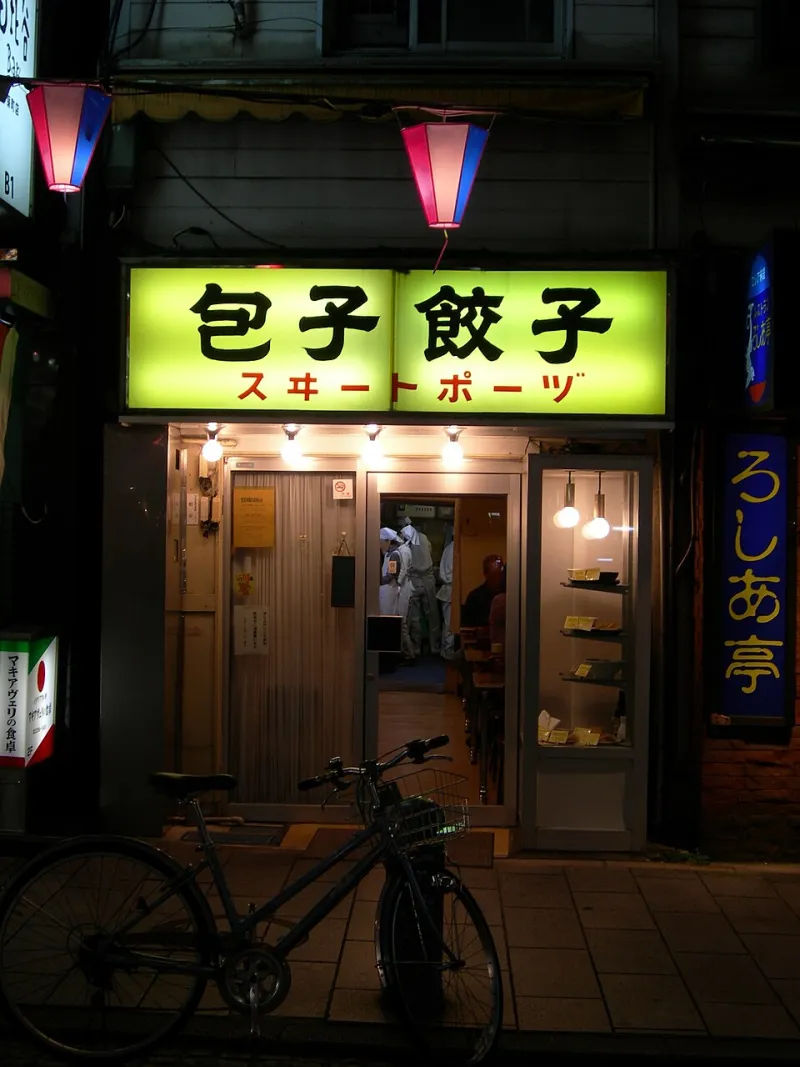
Photo: Ogiyoshisan, CC BY-SA 3.0, via Wikimedia Commons
It's 2:17 a.m. on a Tuesday in Seattle, and the conveyor belt is still moving.
At a kaiten-zushi spot in Capitol Hill, a rotating parade of small plates drifts past a handful of customers who range from a pair of nurses just off a hospital shift to a solo guy with headphones in, methodically working through his third plate of salmon nigiri like he has absolutely nowhere else to be. The overhead lighting is warm. The room is quiet in a productive way. Nobody is in a hurry. Nobody is performing.
This is the vision. And it's spreading.
Across American cities — Seattle, LA, New York, Chicago, Houston, and increasingly in mid-size markets like Portland, Austin, and Atlanta — a new category of venue is quietly establishing itself: Japanese-inspired spaces designed to exist comfortably outside of conventional business hours. They're not bars. They're not diners. They're something harder to categorize and, apparently, exactly what a significant chunk of the American public has been waiting for.
What Japan Figured Out That We Didn't
Japan's relationship with nighttime infrastructure is genuinely different from America's in ways that go beyond the famous convenience stores (though yes, a 3 a.m. Lawson's run absolutely slaps). The Japanese concept of the manga kissa — a manga café that doubles as a private workspace, sometimes a sleeping spot, always a refuge — has no real American equivalent. Neither does the karaoke box open until 5 a.m., or the family restaurant chain that serves a full menu around the clock without making you feel weird for being there alone at midnight.
These aren't just businesses that happen to stay open late. They're architecturally and philosophically designed around the idea that nighttime has legitimate, varied human needs — for solitude, for community, for sustenance, for stimulation — and that those needs deserve to be met with the same intentionality as daytime ones.
America, by contrast, has historically offered two modes after dark: the bar scene (loud, alcohol-forward, socially demanding) and the 24-hour diner (fluorescent, functional, a little melancholy). The gap between those two options is enormous, and a growing number of entrepreneurs — many of them Japanese-American or deeply influenced by time spent in Japan — are building directly into it.
The Venues Leading the Charge
In Los Angeles, Yomiya — which roughly translates to "night visit" — opened in 2023 as a hybrid manga library, tea house, and quiet workspace operating from noon to 4 a.m. The concept was, by the owner's own admission, a gamble. "Nobody thought the hours made sense," says founder Kenji Watanabe, a Osaka-born designer who spent eight years in the US before opening the space. "But the first weekend we had a line at midnight. That told me everything."
Yomiya's clientele skews heavily millennial and Gen Z, with a notable proportion of healthcare workers, creatives on irregular schedules, and — Watanabe notes this with some surprise — a lot of people who simply don't sleep well and want somewhere better than their own apartments to be awake in.
In New York, a rotating-sushi concept called Nagare recently extended its hours to 3 a.m. on weekends after discovering that its post-midnight bookings were outpacing its dinner rush. The math didn't make obvious sense until management started paying attention to who was coming in late: not the bar crowd looking for a food sponge, but a deliberate, hungry-for-something-specific group that wanted the experience of the meal without the noise and social overhead of prime time.
"Late night used to mean fast food or whatever's still open," says Nagare's general manager, Diane Okafor. "Our customers are choosing us. That's a different energy entirely."
Sleep Deprivation, Work Culture, and the Demand for Curated Escape
It would be irresponsible to celebrate America's expanding 24-hour culture without acknowledging the less romantic forces driving it. The US is, by most measures, a sleep-deprived nation. The CDC has flagged insufficient sleep as a public health epidemic. Gig economy workers, healthcare professionals, remote workers in mismatched time zones, and the chronically anxious all exist outside the 9-to-5 rhythm that most urban infrastructure is built around.
The rise of Japanese-inspired late-night spaces is partly a response to that reality — and it's worth being clear-eyed about whether it's solving a problem or just making a different version of it more aesthetically pleasing.
Dr. Soo-Jin Park, an urban sociologist at the University of Chicago, sees the trend as genuinely complex. "On one hand, you have spaces that are meeting real needs for people who live outside conventional schedules," she says. "On the other, there's a risk of romanticizing what is sometimes just the normalization of overwork and sleeplessness. The Japanese concept of karoshi — death by overwork — exists precisely because 24-hour culture has a shadow side."
The best of the new American venues seem aware of this tension. Yomiya, for instance, deliberately avoids productivity-forward branding. There are no standing desks, no whiteboards, no "hustle" energy. The vibe is explicitly rest-adjacent — you're welcome to work, but the space isn't optimized for it. "I didn't want to build another co-working space that just happens to be open late," Watanabe says. "I wanted to build somewhere that felt like permission to exist without an agenda."
The Loneliness Variable
There's one theme that comes up again and again in conversations about why these spaces are resonating, and it's the one that feels most urgent: loneliness.
Americans are lonely in ways that have become genuinely alarming. The US Surgeon General issued an advisory on the loneliness epidemic in 2023. Young adults report having fewer close friends than any previous generation on record. And the places that used to serve as casual third spaces — the bar, the diner, the church, the community center — have either become too expensive, too socially demanding, or simply too scarce.
Japanese-inspired all-night spaces fill a specific slot in that landscape. They're not asking you to socialize. They're not asking you to drink. They're just asking you to show up, and promising that when you do, the lights will be on, the food will be good, and nobody will rush you out the door.
For a lot of people, that's not a small thing. That's the whole thing.
America has always borrowed liberally from cultures that figured something out before we did. The question now is whether we can import not just the aesthetic of Japan's 24-hour infrastructure, but its underlying philosophy — that the night belongs to everyone, and that the city owes its people a reason to stay.