Privacy, Please: How Japanese Love Hotel Design Is Quietly Transforming the American Couples' Getaway
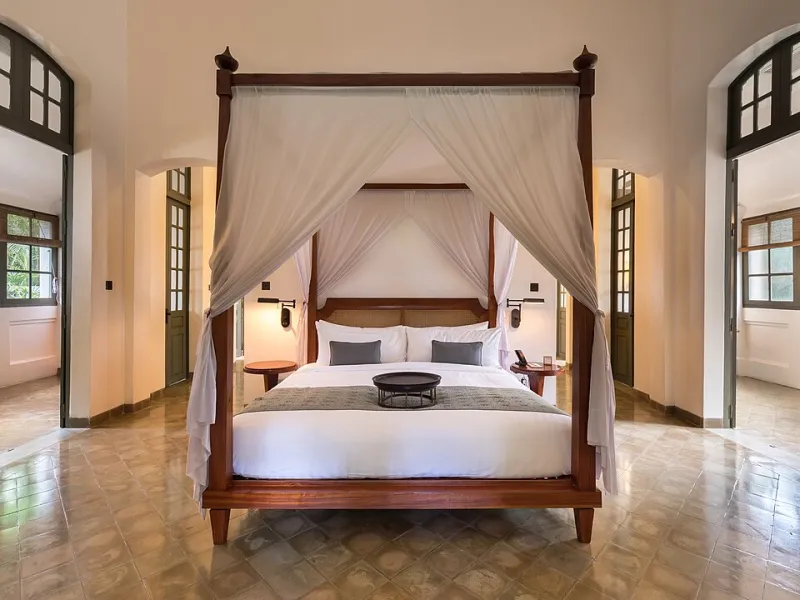
Photo: Basile Morin, CC BY-SA 4.0, via Wikimedia Commons
Let's clear something up right away: Japanese love hotels are not what American pop culture has taught you to picture. Yes, they're designed for couples seeking privacy. Yes, some lean into theatrical themes — think starlit ceilings, jacuzzis shaped like champagne glasses, rooms that double as fantasy sets. But strip away the most flamboyant examples and what you find underneath is actually a masterclass in intentional hospitality design — one that a surprising number of American hoteliers and Airbnb hosts are quietly studying and borrowing from.
The influence is already here. You might have stayed in it without knowing.
What a Love Hotel Actually Is
In Japan, rabu hoteru (love hotels) are a legitimate, mainstream segment of the hospitality industry, generating an estimated $40 billion annually. They exist because Japanese homes are often small, multigenerational, and paper-thin-walled — privacy for adult couples is genuinely hard to come by. Love hotels solve that problem elegantly.
The design philosophy is built around a few core principles: maximum privacy during check-in (often fully automated or staffed behind frosted glass), rooms that are dramatically more lavish than their price point would suggest, a complete absence of social judgment, and an obsessive attention to the sensory experience of the space itself. Lighting is always adjustable and flattering. Sound insulation is exceptional. Amenities are thoughtful and plentiful — quality toiletries, robes, sometimes entire karaoke setups or projection screens.
Critically, the entire experience is designed so that couples never have to perform for an audience. There's no lobby small talk, no awkward eye contact with other guests, no front desk clerk making you feel like you need to justify your booking.
"The genius of the love hotel model is that it takes the couple's experience and makes it the only experience the space is optimized for," says interior designer Keiko Tanaka, who splits her time between Tokyo and Los Angeles and has consulted on boutique hotel projects for both markets. "American hotels are designed around a kind of neutral functionality — they serve everyone adequately. Love hotels are designed to serve one specific dynamic extraordinarily well."
The American Translation
You can see the influence creeping into American hospitality in ways both obvious and subtle. Boutique hotels in cities like Nashville, Austin, and Brooklyn have begun leaning hard into privacy-forward design — separate entrances for suites, check-in via app, room service delivered to a hallway cabinet rather than knocked on your door. The language in their marketing has shifted too: words like sanctuary, retreat, and for two are doing a lot of heavy lifting in hotel branding right now.
On Airbnb, a specific category of listing has exploded in popularity: the "couples' retreat" — typically a standalone tiny home, converted barn, or urban studio decked out with mood lighting, deep soaking tubs, high-thread-count everything, and a deliberate absence of the host's personal clutter. Many of these listings, particularly the most-booked ones, share a visual language that is unmistakably adjacent to Japanese love hotel aesthetics: dark, warm interiors; lighting designed to flatter; a sense of theatrical specialness without being kitschy.
Some hosts are more explicit about the inspiration. Marco and Daniela, a couple in the Catskills who converted their guest cottage into a high-end couples' Airbnb, cite Japanese hospitality philosophy directly. "We looked at a ton of love hotel interiors for reference," Marco says. "Not the crazy themed ones — the sleek, modern ones. The way they use lighting, the way they think about every surface you touch, the way they make the room feel like it exists outside of normal time. That's what we were going for."
The Design Details That Matter
So what specifically are American designers borrowing? Tanaka breaks it down.
Lighting as architecture. Love hotels invest heavily in layered, adjustable lighting systems — warm, low, and forgiving. Overhead fluorescents are basically banned. The goal is to make the room feel like a different world from the moment you walk in. American boutique hotels are increasingly adopting this approach, with smart lighting systems that allow guests to set "scenes" the way you'd set a mood on a playlist.
The tub as centerpiece. In high-end Japanese love hotels, the bath isn't a utilitarian afterthought — it's often the focal point of the room, sometimes visible from the bed, sometimes set into a raised platform. American boutique properties and Airbnbs have caught on, with freestanding soaking tubs becoming one of the most-searched amenities on booking platforms.
Sound as a feature, not an absence. Many love hotels offer curated ambient sound options — rain, ocean, white noise — built into the room's entertainment system. American wellness-focused hotels are starting to incorporate this too, recognizing that acoustic comfort is as important as visual comfort.
Frictionless privacy. Self-check-in isn't just a COVID-era convenience anymore — it's a design feature that communicates trust and discretion. Couples booking a romantic getaway don't want to explain themselves to a front desk. The less human friction in the arrival process, the better.
Shedding the Stigma
Perhaps the most culturally significant shift is attitudinal. American culture has historically been squeamish about spaces designed explicitly for adult intimacy — the idea of a "no-tell motel" carries a specific and unflattering connotation. But that's changing, driven in part by a broader cultural reckoning with the idea that adult couples deserve spaces that celebrate rather than ignore their relationships.
"There's a generational shift happening," says Dr. Alicia Graves, a cultural anthropologist at NYU who studies American hospitality trends. "Younger Americans are less interested in performing wholesomeness for an imagined audience. They want spaces that are honest about what a couples' getaway actually is — an opportunity for connection, intimacy, and privacy. The Japanese model has always been honest about that. We're finally catching up."
The Future of Couples' Travel
What's emerging in the American market isn't a copy of Japanese love hotel culture — it's something new, filtered through American sensibilities and stripped of the specific social context that made love hotels necessary in Japan. But the DNA is there: the commitment to privacy, the investment in sensory design, the refusal to be neutral about what the space is for.
For couples who've spent years making do with generic hotel rooms that could belong to anyone, that specificity feels like a revelation.
Japan figured this out decades ago. America is finally, quietly, taking notes.