Forget Flowers: Japan's Gift-Giving Rituals Are Showing Gen Z How to Actually Fix What They Broke
Let's be honest: we are collectively terrible at apologizing. A double-tap on someone's story after a blowout fight, a vague "sorry if you were hurt" DM, or — the absolute worst — a meme sent as a peace offering. Gen Z grew up digitally fluent but emotionally scrambled, and it shows in the way we try to repair relationships. But here's the thing: Japan has been doing this right for centuries, and people are finally paying attention.
Enter the world of Japanese apology gifting — a practice so layered, so intentional, and so fundamentally human that it's starting to reshape how young Americans think about accountability, reconciliation, and what it actually means to show up for someone you've hurt.
It's Not Just a Gift. It's a Statement.
In Japan, gift-giving isn't a Hallmark moment. It's a social language with its own grammar. The concept woven through this culture is sometimes loosely translated as shasin — a term that captures thoughtful reciprocity, the idea that an exchange between people carries weight, memory, and intention. When you give someone a gift in the context of an apology or reconciliation in Japan, you're not just handing over an object. You're communicating something that words, especially clumsy ones, often fail to deliver.
"The gift becomes a vessel for the emotion you can't fully articulate," explains Dr. Keiko Tanaka, a cultural anthropologist based in New York who studies Japanese social rituals and their diaspora expressions. "In Japanese culture, there's an understanding that sincerity lives in action, not just speech. The act of choosing something carefully, wrapping it beautifully, presenting it with humility — that entire sequence is the apology."
Compare that to the American default: say sorry, maybe send something generic from an Amazon wishlist, move on. The contrast is kind of brutal when you lay it out like that.
The Wrapper Matters as Much as What's Inside
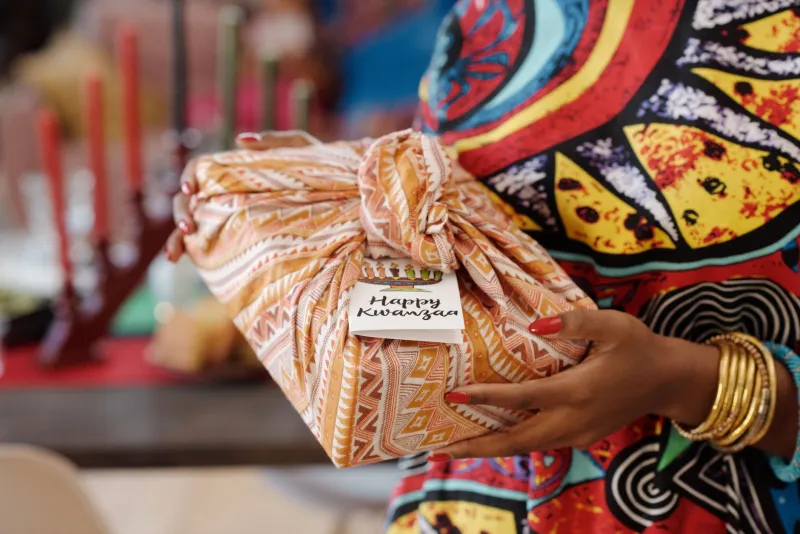
One of the most striking things about Japanese gift culture — especially in the context of making amends — is the obsessive attention to presentation. Wrapping isn't an afterthought. It's part of the message. The Japanese art of tsutsumi, or wrapping, treats the exterior of a gift as an extension of the giver's care and respect for the recipient.
That means the paper, the ribbon, the way it's folded — all of it signals how seriously you're taking the moment. You can't slap a bow on a bottle of wine you grabbed from CVS and call it a reconciliation. The presentation has to match the gravity of what you're trying to repair.
This is genuinely revolutionary for a generation that grew up with two-day shipping and digital gift cards. The effort is the point. And Gen Z, for all the flak it gets about emotional avoidance, is actually hungry for this kind of framework. When you don't have the words — or when words have already failed — a beautifully considered gift gives you a way to communicate across that gap.
Real People, Real Repairs
Asha, 26, from Chicago, describes a falling-out with her college roommate that had been festering for almost two years. "We'd tried to talk about it a few times and it always turned into a fight or just... silence. I felt like I'd exhausted every verbal option."
After going down a rabbit hole of Japanese cultural content online — she credits a mix of YouTube documentaries and a very specific corner of BookTok — she decided to try something different. She spent three weeks tracking down a small ceramic piece from a Japanese American potter whose work her roommate had admired years earlier. She wrapped it herself, wrote a short handwritten note, and left it outside her door.
"She called me that night and we talked for four hours," Asha says. "The gift didn't fix everything on its own, but it opened a door that had been completely shut. It said something I hadn't been able to say."
That story isn't unique. Across Reddit threads, TikTok comment sections, and personal essays floating around Substack, you'll find variations of the same experience — people discovering that a thoughtfully sourced, intentionally presented gift accomplished what months of awkward conversations couldn't.
Why This Hits Different for Gen Z
There's a reason this particular cultural import is resonating so hard right now. Gen Z is navigating a social landscape that's simultaneously over-communicated and deeply lonely. We have more tools for connection than any generation in history, and somehow we're worse at it. Apology culture online has devolved into performance — public callouts, performative accountability posts, the whole theater of it.
Japanese apology gifting cuts through all of that because it's private, personal, and requires genuine effort. You can't fake your way through it. You have to actually think about the other person — what they love, what would matter to them, what would communicate that you see them. That act of seeing someone, really seeing them, is maybe the most powerful thing an apology can do.
"The gift forces you to do the emotional labor before the conversation even starts," says Marcus Webb, a relationship therapist in Los Angeles who has started incorporating elements of Japanese gift philosophy into his practice with younger clients. "By the time you present it, you've already spent hours thinking about this person and what they need. That shifts your entire energy going into the repair."
How to Actually Do This
So what does this look like in practice for an American who didn't grow up with these rituals? A few principles to borrow:
Think specific, not expensive. The most powerful apology gifts aren't the priciest — they're the ones that prove you were paying attention. A book by their favorite author, a snack they mentioned once in passing, something tied to an inside joke or a shared memory. Specificity says I know you.
Wrap it with intention. You don't need to master tsutsumi overnight, but put in more effort than a gift bag from the drugstore. Use real paper, tie it carefully, maybe include a handwritten note instead of a printed card. The tactile experience of receiving something that was clearly handled with care matters.
Time it right. In Japanese culture, the timing of a gift is part of its meaning. Don't rush it. Give yourself time to find the right thing, and present it when the moment is genuinely calm — not in the middle of a fight or right before a hard conversation.
Let it speak first. Resist the urge to over-explain. Present the gift, let the person receive it, and give them space to feel whatever they feel before you launch into your talking points.
The Bigger Takeaway
What Japan is really teaching us here isn't just about gifts. It's about the radical idea that how you show up for someone matters as much as what you say. In a culture obsessed with verbal processing, hot takes, and the perfectly worded apology caption, there's something almost countercultural about choosing action over articulation.
Gen Z is already rewriting a lot of social scripts — around work, around gender, around what friendship and loyalty even look like. Adding a more intentional, culturally-informed approach to reconciliation feels like a natural next step. Because at the end of the day, the people worth keeping in your life deserve more than a text that starts with "hey so."
They deserve the effort. And sometimes, they deserve something beautiful, carefully wrapped, and left at their door.