The Quiet Hum of the Vending Machine: How Japan's Automated Snack Culture Became Gen Z's New Meditation
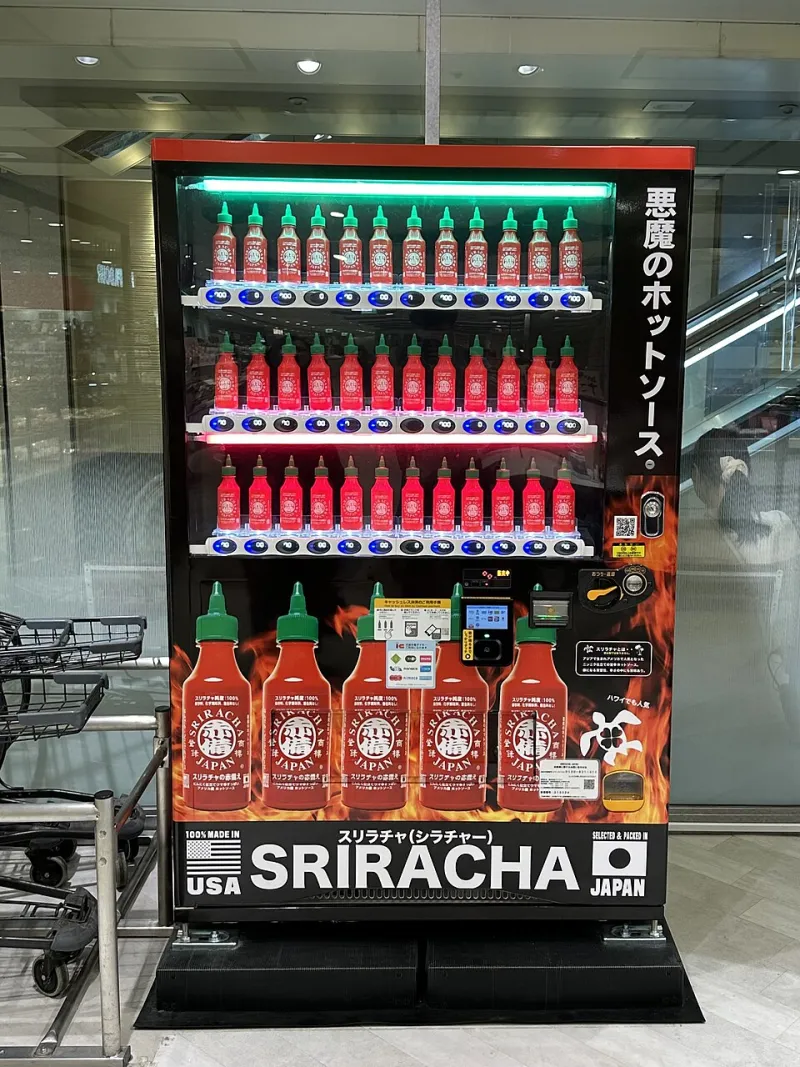
Photo: Zheng Zhou, CC BY-SA 4.0, via Wikimedia Commons
There's a particular kind of peace that settles over you at 11 p.m. when you're standing in front of a vending machine in Osaka. The street is quiet. Nobody is watching you. Nobody is judging your choice between a hot can of corn soup and a strawberry milk. The machine just glows at you — patient, non-judgmental, endlessly ready — and somehow, that feels like exactly what you needed.
American Gen Z is catching on. And fast.
The Machine That Doesn't Judge You
Japan has approximately one vending machine for every 23 people, making it one of the most vending-machine-dense nations on the planet. But what sets Japanese automated retail apart isn't just the sheer volume — it's the design philosophy behind it. These machines are meticulously maintained, brilliantly lit, and stocked with an almost surreal variety of products, from hot ramen cups to fresh flowers to entire meals. More importantly, they exist in a cultural context where the transaction is frictionless, anonymous, and completely devoid of social anxiety.
For a generation raised on the exhausting performance of social media — where even a Starbucks order can feel like a personality statement — that kind of low-stakes interaction is practically revolutionary.
"There's no barista to impress, no line pressure, no small talk," says Dr. Priya Menon, a behavioral psychologist based in Austin, Texas, who has been researching the intersection of retail environments and adolescent mental health. "For teenagers who deal with social anxiety, even minor transactional moments can feel overwhelming. The vending machine removes all of that friction. You get to just... exist, make a choice, and receive something. It's surprisingly restorative."
TikTok Made Them Do It (In the Best Way)
It probably started, as most Gen Z cultural moments do, on TikTok. Videos tagged #JapaneseVendingMachine have racked up hundreds of millions of views — not because the content is dramatic or shocking, but because it's the opposite. Teens filming themselves wandering quiet Japanese streets, pausing at a glowing machine, making a slow, deliberate selection. The comments are always the same: this looks so peaceful, I need this, why does this feel like therapy?
For many young Americans who've never set foot in Japan, these videos function almost like ASMR — a sensory experience that triggers a genuine relaxation response. The ambient hum of the machine's refrigeration unit, the satisfying clunk of a can dropping into the retrieval slot, the soft backlit glow against a dark street. It hits different.
Seventeen-year-old Maya from Portland, Oregon, has never been to Japan, but she's built an entire corner of her room around the aesthetic. She imported a compact Japanese-style vending machine display unit from an online retailer and stocks it with imported Japanese drinks she orders monthly. "It started as a décor thing, but honestly I use it when I'm stressed," she says. "I'll go pick something out of it and it just kind of resets me. It sounds weird but it works."
Maya isn't alone. Across Reddit, Discord servers, and niche YouTube communities, American teens are sharing their vending machine rituals — some physical, some purely aspirational — as legitimate components of their mental health toolkit.
The Psychology of Intentional Simplicity
Dr. Menon has a framework for why this works. She calls it "bounded choice comfort" — the psychological relief that comes from making a low-stakes decision within a clearly defined set of options. "When everything in your life feels overwhelming and open-ended, having a moment where the only question is 'hot or cold, this or that' can actually feel grounding," she explains. "It's a micro-moment of agency without consequence."
Japanese vending machine design, she notes, is almost accidentally therapeutic in its intentionality. The machines are placed in calm, often uncrowded locations. The interface is intuitive. The transaction takes under a minute. There's a reason why travel content creators consistently describe stumbling upon a vending machine at night as one of the most unexpectedly comforting travel experiences in Japan.
"It's the combination of warmth — literal warmth from the machine's light and the option of hot drinks — with the absence of social demand," Dr. Menon says. "That's a very specific emotional cocktail that a lot of young people are clearly hungry for."
American Retail Is (Slowly) Getting the Memo
Some forward-thinking businesses in the US are starting to take notes. A handful of Japanese convenience store-inspired spots have opened in cities like Los Angeles, New York, and Seattle, deliberately incorporating vending machine walls and automated retail elements not just as novelties but as atmospheric anchors. The goal isn't efficiency — it's vibe.
Merchandise designers and interior decorators are increasingly referencing Japanese konbini (convenience store) aesthetics in their work, drawn to the clean lines, the warm ambient lighting, and the sense of quiet order. Even some therapy and wellness centers have begun experimenting with "comfort vending" stations — small automated kiosks stocked with stress balls, herbal teas, and mindfulness cards — in waiting rooms and common areas.
It's a small shift, but a telling one.
More Than a Snack, Less Than a Spa
What's genuinely fascinating about the vending machine wellness trend is how unpretentious it is. There's no subscription fee, no influencer selling you a program, no 47-step routine. It's a machine. You press a button. You get a drink. And somewhere in that simplicity, a lot of young Americans are finding something that feels increasingly rare: a moment that asks absolutely nothing of them.
In a world where even self-care has become performative — photographed, optimized, and shared — the vending machine offers something quietly radical. A transaction that begins and ends with you, glowing softly in the dark, requiring nothing but a dollar and a decision.
Honestly? That's the most Japanese thing about it.