Sing It Out: How Private Karaoke Rooms Became Gen Z's Unlikely Therapy Session
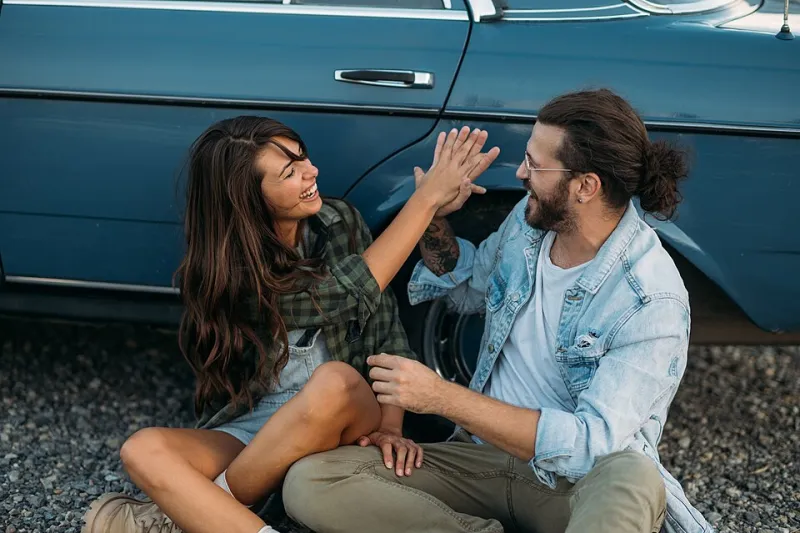
Photo: Shixart1985, CC BY 2.0, via Wikimedia Commons
There's a moment that happens in every karaoke box, usually somewhere around the second song of the night. Someone who swore up and down they weren't going to sing grabs the microphone anyway. Their voice cracks on the high note. Everyone screams. Nobody cares. And for the first time in maybe years, that person looks — genuinely, visibly — relieved.
That moment is happening across America right now, and it's not a coincidence.
Japanese-style private karaoke rooms — the kind where your group books a small, soundproofed space by the hour instead of performing in front of a bar full of strangers — have been slowly multiplying in US cities for the better part of a decade. But lately, something has shifted. The clientele is younger, the bookings are more frequent, and the reasons people give for showing up go way beyond just wanting to sing. For a generation defined by social anxiety, digital overstimulation, and a genuine terror of being perceived, the karaoke box has become something close to sacred.
The Open-Bar Karaoke Problem Nobody Talks About
American karaoke, in its traditional form, is kind of a nightmare if you think about it too hard. You wait at a bar. A stranger hosts. You eventually shuffle up to a stage or a corner of the room, take a microphone in front of people you've never met, and perform. The whole thing is engineered for extroverts and people who've had exactly the right number of drinks.
For a huge chunk of Gen Z — a generation that researchers have repeatedly flagged as experiencing record levels of social anxiety — that setup is less "fun night out" and more "active threat."
Japanese karaoke culture figured this out decades ago. The karaoke box model, which became dominant in Japan during the 1980s, strips away the audience of strangers entirely. You get a room, a screen, a couple of microphones, and the people you already trust. The performance pressure evaporates. What's left is something that feels a lot more like play.
"We have people who tell us they haven't sung in front of anyone since elementary school," says Marcus Choi, co-owner of Harmonize, a karaoke box venue in Los Angeles that's seen a 40% uptick in bookings from the 21-to-28 demographic over the past two years. "They come in nervous. They leave loud. It's kind of wild to watch."
Why Psychologists Are Actually Paying Attention
The therapeutic framing isn't just vibes — there's some real science backing up what karaoke box regulars have been experiencing intuitively.
Dr. Priya Nambiar, a licensed therapist based in Chicago who specializes in anxiety disorders and young adults, has started recommending private karaoke outings as what she calls "low-stakes exposure" — a way of practicing vulnerability and presence without the clinical weight of a formal therapy context.
"One of the core struggles with social anxiety is the anticipatory dread," she explains. "You build up the idea of being seen and judged into something catastrophic. What karaoke boxes do really well is provide a controlled environment where you can practice being seen — by people who already love you — and survive it. That's genuinely useful."
She's also quick to point out the physical dimension. Singing activates the vagus nerve, which plays a significant role in regulating the nervous system. Group singing, specifically, has been linked in multiple studies to increased oxytocin levels and reduced cortisol. In other words: belting out Bohemian Rhapsody with your friends isn't just fun, it's biologically calming.
"I'm not saying karaoke replaces therapy," Nambiar adds with a laugh. "But as a supplement? It's doing something real."
The Judgment-Free Zone That Actually Means It
What makes the karaoke box format uniquely powerful isn't just the privacy — it's the implicit social contract that comes with it. Everyone in the room has agreed, by showing up, to be equally ridiculous. The person who books the room and the person who gets dragged along reluctantly are both going to end up on that microphone eventually. The playing field is flat in a way that almost no other social experience manages to be.
Jamila Torres, a 26-year-old graphic designer in New York, started going to karaoke boxes with her friend group about a year ago after what she describes as a rough post-pandemic stretch of feeling disconnected and weirdly scared of social situations she used to handle easily.
"I'd become such a homebody," she says. "Going to parties felt overwhelming. Even just dinner with more than four people felt like a lot. But karaoke was different because there's a built-in activity. You're not just standing there trying to make conversation. You're doing something together."
For Torres, the format created a kind of structure that made the social part feel manageable. "Once you've screamed Chappell Roan lyrics with someone, you've bonded. It's immediate. You can't fake it."
The Bigger Picture: Why This Is a Cultural Moment
It would be easy to write off the karaoke box revival as just another trend in experiential entertainment — the escape room era gave way to the axe-throwing era, and now we're here. But the reasons people are gravitating toward it feel more substantive than novelty-seeking.
Gen Z is, by almost every available metric, the loneliest adult generation in American history. They grew up with smartphones, came of age during a pandemic, and entered a social landscape defined by performance anxiety, cancel culture, and the relentless pressure of being visible online. The karaoke box offers something almost radical by comparison: a space where being bad at something is the entire point, where no one is filming for content (most venues actively discourage it), and where the only audience that matters already decided you were worth showing up for.
That's not nothing. That's actually kind of everything.
Venues are starting to catch on to the emotional weight their spaces carry. Harmonize now offers extended "open hour" bookings specifically marketed toward friend groups doing birthday celebrations or what Choi jokingly calls "breakup recovery sessions." Several karaoke spots in major cities have started partnering with local therapists for wellness-adjacent event nights — think guided breathing before the first song, themed setlists around confidence-building.
Is it a little much? Maybe. But if the alternative is another night doomscrolling alone, a private room and a microphone and the people who'll cheer for your terrible high note is starting to sound like exactly the kind of medicine America needs right now.
So book the room. Pick the song you're scared of. Sing it badly.
That's the whole point.