The Business Card Bow That's Quietly Revolutionizing How Gen Z Navigates Office Power
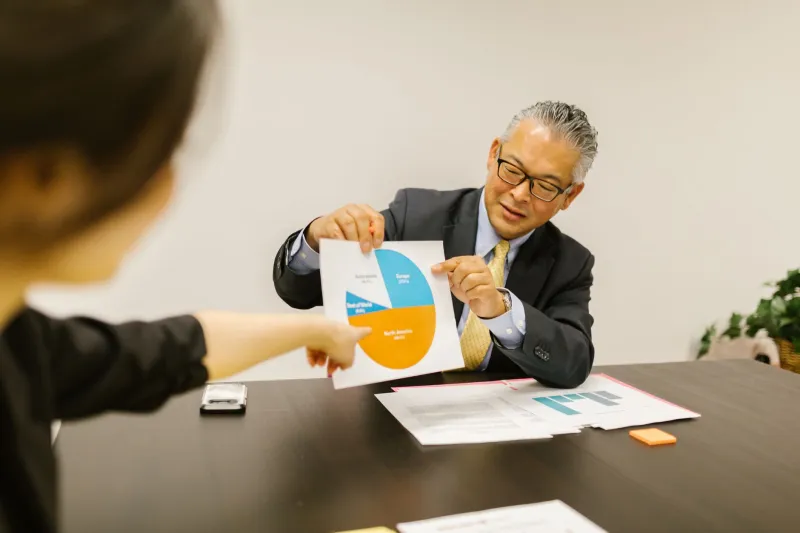
Picture this: You're 24, three months into your first real job, and your manager just asked you to take on a project that's absolutely not in your job description. Your stomach drops. You don't want to say yes. You definitely don't want to say no. You smile awkwardly and mutter something noncommittal before spending the rest of the afternoon stress-eating desk snacks and drafting passive-aggressive texts to your group chat.
Somewhere in Tokyo, a junior associate at a mid-sized firm is handling the exact same situation — except they're doing it with the kind of quiet, composed authority that doesn't just deflect the ask. It reframes the entire dynamic. And weirdly? It all starts with a business card.
What Even Is Meishi, and Why Should You Care?
Meishi koukan — the Japanese ritual of exchanging business cards — sounds like the driest possible corporate topic until you actually understand what's happening beneath the surface. In Japan, a business card isn't just a piece of cardstock with your name and LinkedIn URL on it. It's a physical extension of your professional identity. Handing one over is an act of mutual acknowledgment, and receiving one is almost a form of ceremony.
You present your card with both hands, a slight bow, and your card facing toward the recipient so they can read it immediately. You receive theirs with the same deliberate, two-handed respect. You study it. You don't shove it in your pocket or scribble on it. You place it carefully on the table in front of you, oriented correctly, like it matters — because in this context, it does.
The whole exchange takes maybe forty-five seconds. But those forty-five seconds communicate something that most American professionals spend years fumbling to articulate: I see you, I respect your position, and I expect the same in return.
The Real Lesson Isn't About Cards at All
Here's where it gets interesting for Gen Z. The meishi ritual is really a crash course in something much harder to teach: how to assert yourself without asserting dominance. How to set a boundary without declaring war.
American workplace culture has historically swung between two extremes — the old-school "yes sir, whatever you need" deference that burned out entire generations, and the more recent overcorrection of radical candor and boundary-setting that, let's be honest, sometimes lands as abrasive even when it's completely warranted. Gen Z is caught right in the middle of that cultural whiplash, trying to advocate for themselves in environments that weren't exactly built with their communication style in mind.
The meishi framework offers a third path. It's built on the idea that respect and self-possession aren't mutually exclusive. You can honor someone's seniority and still hold your ground. You can acknowledge the hierarchy and still navigate it on your own terms.
This is essentially what Japanese business etiquette experts call ma — that deliberate, meaningful pause between stimulus and response. Before you react, you create space. Before you answer, you signal that you've genuinely considered the ask. That pause alone shifts the power dynamic more than any carefully rehearsed speech could.
Gen Z Is Already Doing This (They Just Don't Know It)
Scroll through any corner of WorkTok or LinkedIn's younger demographic and you'll find Gen Z already gravitating toward softer, more strategic forms of professional communication. The trend toward "quiet quitting" discourse, the obsession with "soft no" frameworks, the entire genre of content around "how to say no to your boss without getting fired" — it's all circling the same drain that Japanese business culture figured out decades ago.
What meishi adds to that conversation is ritual as strategy. When you slow down an interaction and make it feel considered, you automatically change how the other person receives what you're about to say. You're no longer just reacting — you're responding. And there's a world of difference between those two things in a meeting room.
Some Gen Z professionals are actively importing pieces of this into their day-to-day. Taking a breath before answering an email. Responding to a Slack message with a considered paragraph instead of a knee-jerk "sure!" Asking for 24 hours to "think it through" before committing to a new responsibility. These micro-moves are meishi energy, even if nobody's calling them that.
The Hierarchy Hack Hidden in Plain Sight
One of the most underrated aspects of meishi culture is how it handles hierarchy without either worshipping it or dismantling it. In Japan, the exchange is carefully calibrated — the junior person presents their card first, the most senior person receives first. But the receiving is where things get quietly radical.
Because when you accept someone's card with two hands and genuine attention, you're not just being polite. You're signaling that you are someone who pays attention. Someone who doesn't rush. Someone who takes things seriously. And in a culture that often rewards whoever speaks loudest or moves fastest, that stillness reads as confidence, not passivity.
For Gen Z workers navigating open-plan offices, hybrid schedules, and bosses who text at 11 PM, this kind of deliberate composure is practically a superpower. It's the difference between being perceived as the overwhelmed new hire and being perceived as the person who's got it together — even when you're figuring it out in real time.
Bringing It Stateside: What This Actually Looks Like at Work
You don't need to start carrying a lacquered business card holder to your next Zoom meeting (though honestly, points for commitment). What you can do is start thinking about the intention behind the meishi ritual and where it maps onto your actual professional life.
Before your next one-on-one, take thirty seconds to think about what you want to communicate — not just what you want to say. When someone asks you to take something on that feels outside your scope, don't answer immediately. Say "I want to give that the consideration it deserves — can I come back to you by end of day?" When you're in a meeting and someone makes a point you disagree with, pause before responding. Let the silence do some work.
These moves aren't weak. They're not conflict-avoidant. They're the professional equivalent of presenting your card with both hands: I'm here, I'm serious, and I'm not going anywhere.
The Bigger Picture
What Japan's meishi culture ultimately offers Gen Z isn't a script. It's a philosophy. One that says your presence in a room — physical or virtual — carries weight, and how you choose to deploy that presence says everything about who you are as a professional.
In a generation that's been told to speak up, show up, and take up space, the counterintuitive wisdom of meishi is that sometimes the most powerful thing you can do is slow down. Take the card with both hands. Study it like it matters. And then, when you're ready, say exactly what you mean.
No awkward mumbling required.