Trust the Chef or Go Home: Why Gen Z Is Finally Learning to Stop Asking for Substitutions
There's a particular kind of anxiety that lives inside every American restaurant visit. It shows up the moment the server arrives — that low-grade mental scramble of swapping sauces, nixing garnishes, requesting things on the side, and generally treating the menu like a rough draft that needs editing before it can be approved. We've been trained to believe that customization equals care, that having options is the same thing as having power. Japan, very politely, disagrees.
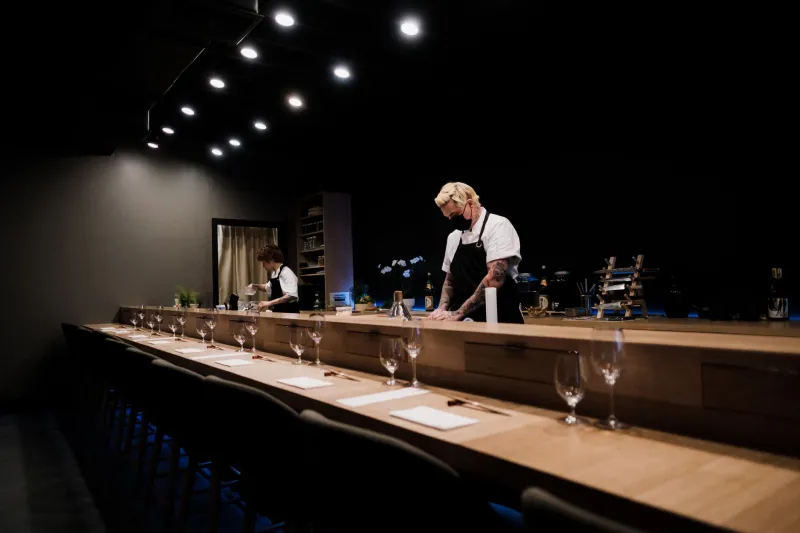
In thousands of Japanese restaurants — from humble ramen counters in Osaka to omakase temples in Tokyo — the rules are simple and non-negotiable: you eat what the chef made. No substitutions. No special requests. Certainly no "can I get that sauce on the side." And here's the wildest part? A growing number of Gen Z diners are not only accepting this — they're actively seeking it out.
The Menu Is Not a Negotiation
If you've ever walked into a serious Japanese restaurant stateside and tried to swap an ingredient, you've probably been met with a polite but firm refusal that felt almost shocking in its confidence. That's not rudeness — it's philosophy.
In Japan, the relationship between a chef and a diner is closer to the relationship between an artist and an audience. You don't walk into a gallery and ask the painter to swap the blue sky for something more taupe because taupe is your thing right now. The work is the work. The chef has spent years — sometimes decades — perfecting a dish down to the temperature of the broth, the thickness of the noodle, the exact moment the egg is pulled. When you ask to modify that, you're not just making a dietary preference known. You're essentially telling the artist their vision is a starting point, not a destination.
This philosophy is baked into the concept of shokunin — the Japanese idea of a craftsperson who dedicates their entire life to mastering a single discipline. A sushi shokunin doesn't make a slightly different version of their signature roll for every person who sits down. They make the roll, and the expectation is that you show up ready to receive it.
Why Gen Z Is Actually Into This
Here's where it gets interesting. Gen Z has grown up in the most customizable consumer landscape in human history. Every streaming platform is algorithmically tailored. Every coffee order is a five-modifier sentence. Every social media feed is a mirror reflecting your exact preferences back at you. And somehow, all of that control has made an entire generation more anxious, not less.
Decision fatigue is real, and it hits different when you're 24 and every choice — from your oat milk ratio to your career path — feels weighted with the possibility that you made the wrong call. The paradox of choice isn't just a Malcolm Gladwell talking point anymore; it's a daily emotional experience.
So when a Japanese restaurant hands you a fixed menu and essentially says we've already made the decision for you, and it's going to be excellent — there's something almost euphoric about that. You can just... sit there. Eat the thing. Trust the process.
This is showing up in how Gen Z is talking about food online, too. The most viral restaurant content right now isn't "look at all the ways I customized this dish." It's omakase videos — those long, reverent sequences where a chef places course after course in front of a diner who has zero idea what's coming next and is completely at peace with that. The comment sections are full of people saying things like "this is the most relaxed I've ever seen someone eat" and "I need this energy in my whole life."
What This Is Actually Teaching Us About Control
The no-substitution rule isn't really about food. It's about trust — and about the anxiety of always needing an exit strategy.
American culture has spent decades telling us that advocating for our preferences is the same as advocating for ourselves. And in a lot of contexts, that's true. But there's a version of that mindset that tips into something less healthy: the belief that if we don't control every variable, something will go wrong. That we can't trust someone else's expertise. That our preferences are always more valid than someone else's craft.
Japanese dining culture gently but firmly pushes back on that. It says: there are people who know things you don't know, who have practiced things you haven't practiced, and sometimes the most sophisticated thing you can do is let them lead. Giving up the need to modify everything isn't weakness — it's a form of respect that also, incidentally, tends to result in a much better meal.
This translates. Gen Z is starting to apply this logic in places far outside the restaurant. In creative collaborations, in therapy, in relationships — there's a growing cultural conversation about the difference between having preferences and needing to control outcomes. The Japanese dining room is, weirdly, one of the best classrooms for that lesson.
American Food Culture's Customization Problem
Let's be honest: American food culture has a customization addiction. Chipotle built an empire on it. Starbucks turned drink orders into personality statements. The "have it your way" ethos is so embedded in how we eat that a restaurant saying no to a modification can feel almost aggressive.
But some of the most exciting American chefs are pushing back. The fixed-menu tasting format has exploded in cities like New York, LA, and Chicago — partly because it's economically efficient, but also because diners are genuinely hungry (sorry) for the experience of being guided rather than accommodated. Restaurants like Atomix in New York or Smyth in Chicago operate with that same Japanese spirit: the chef's vision is the product, and you're here to experience it, not redesign it.
The conversation is shifting. "No modifications" is starting to feel less like a restaurant being difficult and more like a restaurant taking itself seriously — which, it turns out, is exactly what a generation exhausted by infinite options has been waiting for.
Surrender as a Skill
There's something almost radical about choosing to trust someone else's judgment in an era when self-optimization is practically a religion. But that's exactly why the Japanese approach to dining is landing so hard with Gen Z right now. It's not about giving up agency. It's about recognizing that agency doesn't always mean control — sometimes it means choosing, deliberately and consciously, to let go.
The chef made something. It took years of their life to get there. And if you can walk in, sit down, and eat it without asking for anything to be different — you might just leave the table having learned something that goes way beyond dinner.