Less Is More: How Japan's Minimalist Texting Culture Is Curing Gen Z's Group Chat Anxiety
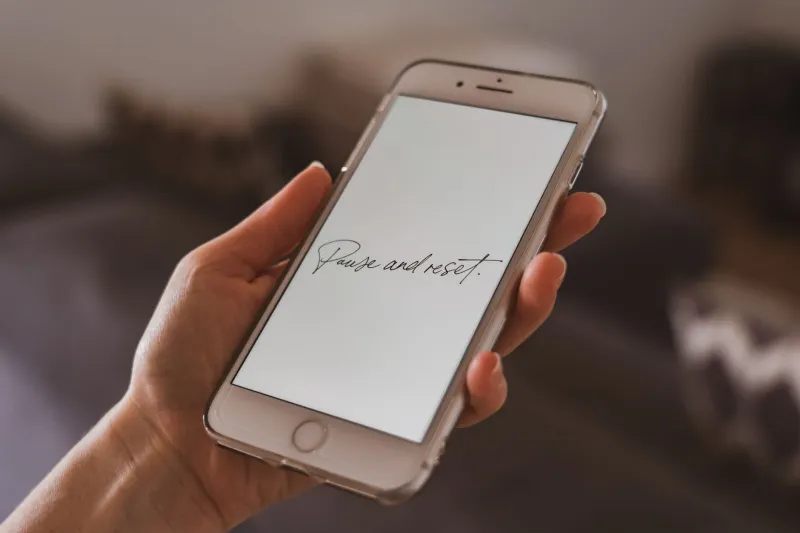
Your phone buzzes. Then again. Then four more times in quick succession. You open the group chat and it's — nothing. Literally nothing useful. Just a cascade of "lol," "omg same," "wait what," and a voice memo someone sent at 1 a.m. that nobody asked for. Sound familiar? Yeah. We're all exhausted.
Here's the thing though: not everyone texts like this. In Japan, digital communication has long operated on a completely different frequency — one that Gen Z, fried from years of infinite notification cycles, is starting to tune into in a major way.
The Japanese Approach to Texting Isn't What You Think
Forget the stereotype of Japan as a hyper-technological society where people are glued to screens 24/7. Sure, the country gave us emoji (yes, literally — the word is Japanese, and the first emoji set was created by NTT DoCoMo in 1999), but Japanese digital communication culture is surprisingly restrained.
On LINE, Japan's dominant messaging app, conversations tend to be shorter, more purposeful, and — crucially — more comfortable with silence. Leaving a message on "read" isn't always the social catastrophe it would be in an American group chat. Sometimes it just means: I saw it. I'm good. We're good. No response needed.
This isn't rudeness. It's a form of respect — for the other person's time, and for the weight of words themselves.
Why American Texting Culture Got So Loud
Let's be real: the US relationship with texting has become kind of unhinged. There's this unspoken pressure to be constantly available, to respond fast, to match energy, to never let a conversation die. Silence reads as shade. A short reply reads as anger. Three words reads as passive aggression.
The result? A generation that's simultaneously more "connected" than any before it and more socially anxious than ever. Studies keep confirming what we already feel — the more notifications, the more cortisol. The more group chats, the more social fatigue. We built a communication culture that never lets anyone actually rest.
And somewhere along the way, we started mistaking volume for intimacy.
Enter: The Strategic Pause
One of the most quietly radical ideas in Japanese communication is the concept of ma — a term that translates roughly to "negative space" or "meaningful pause." It shows up in architecture, music, conversation, and yes, texting. The silence between messages isn't dead air. It's part of the message.
Gen Z creators and cultural commentators have started picking up on this, particularly on TikTok and Substack, where a growing number of young Americans are documenting their experiments with texting less. Not ghosting — that's different, and still rude — but genuinely choosing to send fewer, more considered messages.
The feedback is almost universally the same: it feels better. Relationships feel calmer. Conversations feel more meaningful. The people who actually matter show up more clearly when you stop filling every gap with noise.
Emoji as a Language, Not a Decoration
Here's where it gets really interesting. Japan didn't just invent emoji — they developed a sophisticated visual shorthand that carries enormous emotional nuance in a single character. A 🙏 in Japanese digital culture can mean gratitude, apology, prayer, or a request, depending on context. A single 😊 at the end of a sentence can soften an entire message in ways that paragraphs of explanation can't.
American emoji use tends to be more chaotic — stacked, ironic, meme-layered. Which is fun! But it also means we've inflated the currency. When everything is a 💀 or a 🫠, nothing actually communicates anymore.
The minimalist approach flips this. One well-chosen emoji, placed with intention, lands harder than a string of ten. It's the difference between a perfectly seasoned dish and dumping the whole spice rack on your plate.
The Group Chat Reckoning
Nothing encapsulates American texting chaos quite like the group chat. The birthday planning thread that somehow becomes a therapy session. The family chat that's 40% forwarded news articles nobody wanted. The friend group chat where three people are having a full conversation and everyone else has notifications muted.
In contrast, Japanese group communication on LINE tends to be more functional — plans get made, information gets shared, and then the chat goes quiet until there's something worth saying. There's less performance of connection and more actual connection.
Some Gen Z users in the US are actively restructuring their digital social lives along these lines. Smaller group chats. Clearer purposes. The freedom to not respond immediately without it meaning something dramatic. It's not antisocial — it's a recalibration.
What Intentional Texting Actually Looks Like
So what does it look like in practice? A few shifts that people are finding genuinely transformative:
Send the shorter version. Whatever you were about to text — cut it in half. Then cut it in half again. Does it still say what you mean? Cool. Send that.
Let silence be neutral. Not every message needs a response. Not every response needs to be immediate. Practicing this — both giving and receiving — is weirdly liberating.
Use emoji with intention. One, maybe two, placed deliberately. Let them do actual work instead of decorating noise.
Resist the filler reply. "Haha," "lol," "yep" — these exist to fill space, not to communicate. Japan's texting culture doesn't really have an equivalent of the filler reply, and conversations are better for it.
Treat your read receipts like a boundary, not a weapon. Reading without responding isn't inherently rude. It can just mean: received, no action needed.
The Deeper Thing Going On Here
There's something worth sitting with beneath all of this. Japan's communication minimalism isn't just a productivity hack or a wellness trend — it reflects a deeper cultural value around not burdening other people unnecessarily. Every message sent is, in some small way, a demand on someone else's attention. Sending less means respecting more.
For a generation that grew up being told to "speak up," to "be seen," to document everything and share everything and perform connection constantly — the idea that restraint could actually be a form of care is kind of revolutionary.
Digital burnout isn't going away on its own. The apps are designed to keep you hooked, the algorithms reward engagement, and the social pressure to be perpetually available isn't going to evaporate overnight. But the way out might not be a digital detox or deleting all your apps. It might just be texting a little more like they do in Tokyo.
Fewer words. Better words. And a whole lot more comfortable silence.